




Our Mission and Vision

InfiX.ai is pioneering collaborative generative AI through low-resource training, model fusion, GUI agents, and multimodal intelligence.

Mission

At InfiX.ai, we believe in making AI more accessible, efficient, and capable. Our research focuses on developing innovative techniques that push the boundaries of what AI systems can achieve while maintaining practical applicability.

Vision

We are not only building another model - We are building the system that builds all models.

ACCESSIBLE EFFICIENT CAPABLE

Research Focus

Low-Precision Training & Efficient Inference

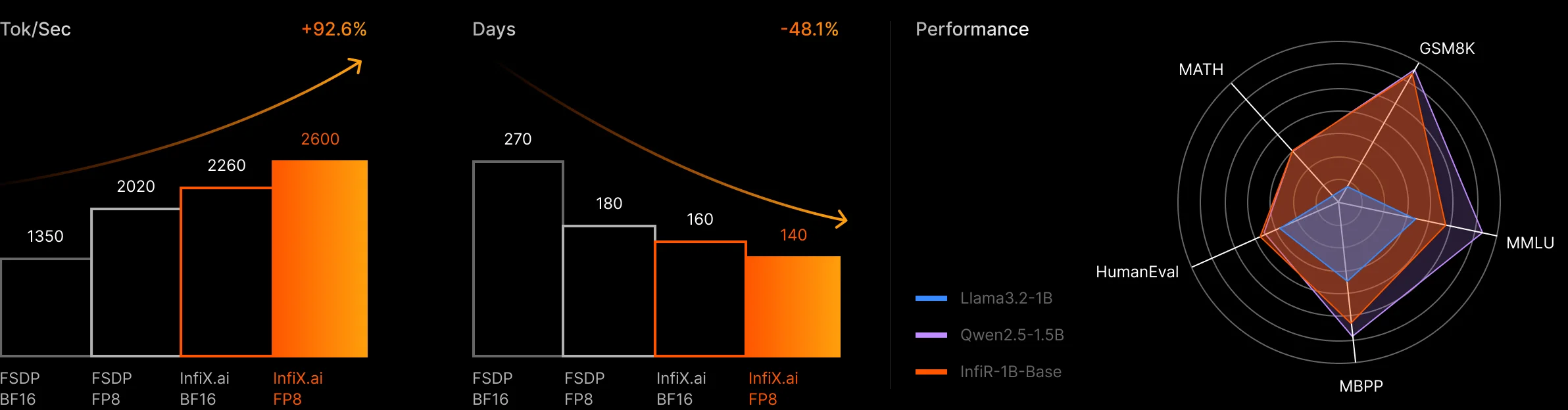
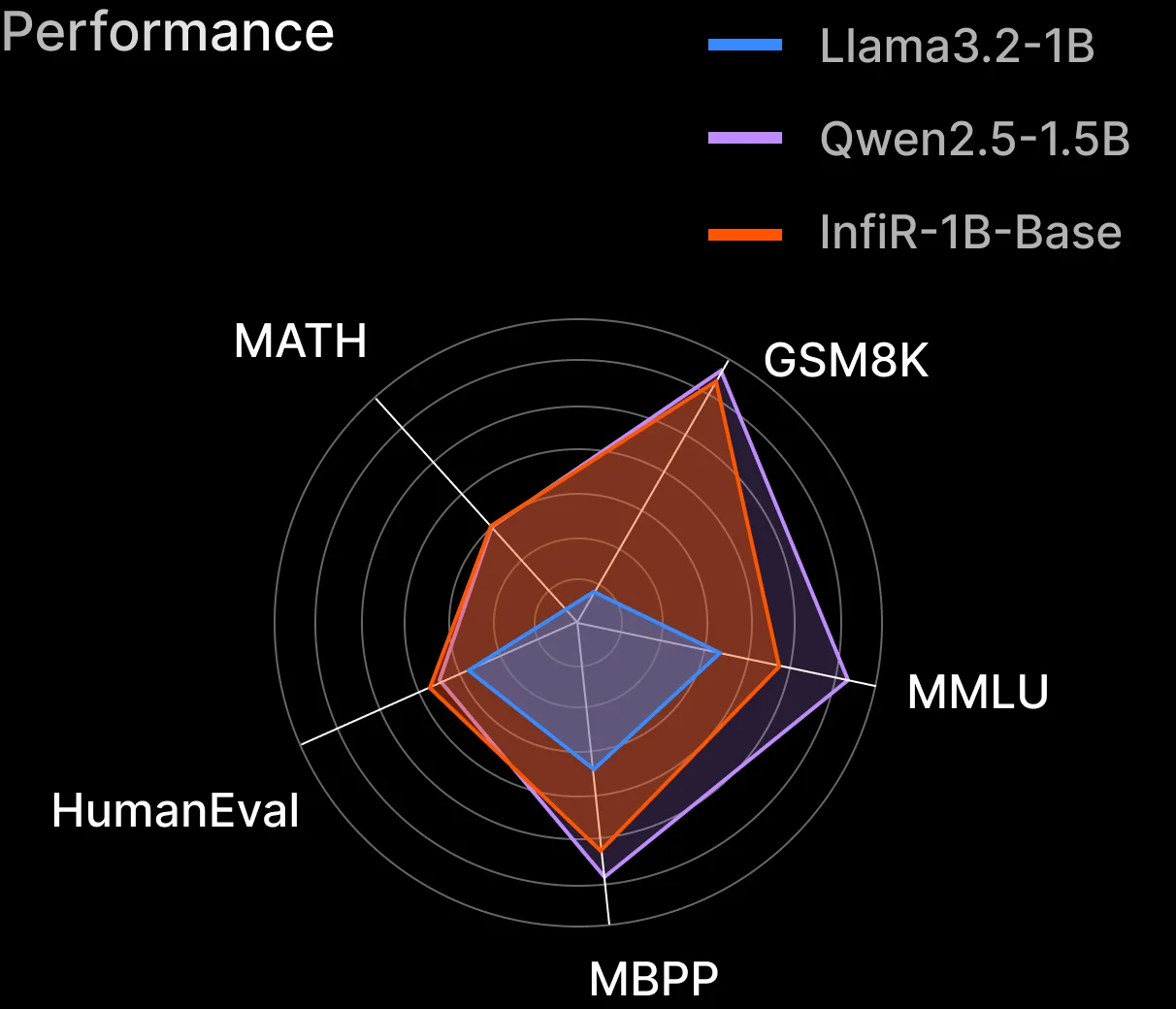
Achieve near-BF16 accuracy with significantly greater efficiency. Compared with traditional FSDP, InfiX.ai cuts training time by 48.1%, boosts training speed by 92.6%, and reduces memory pressure and inference costs.
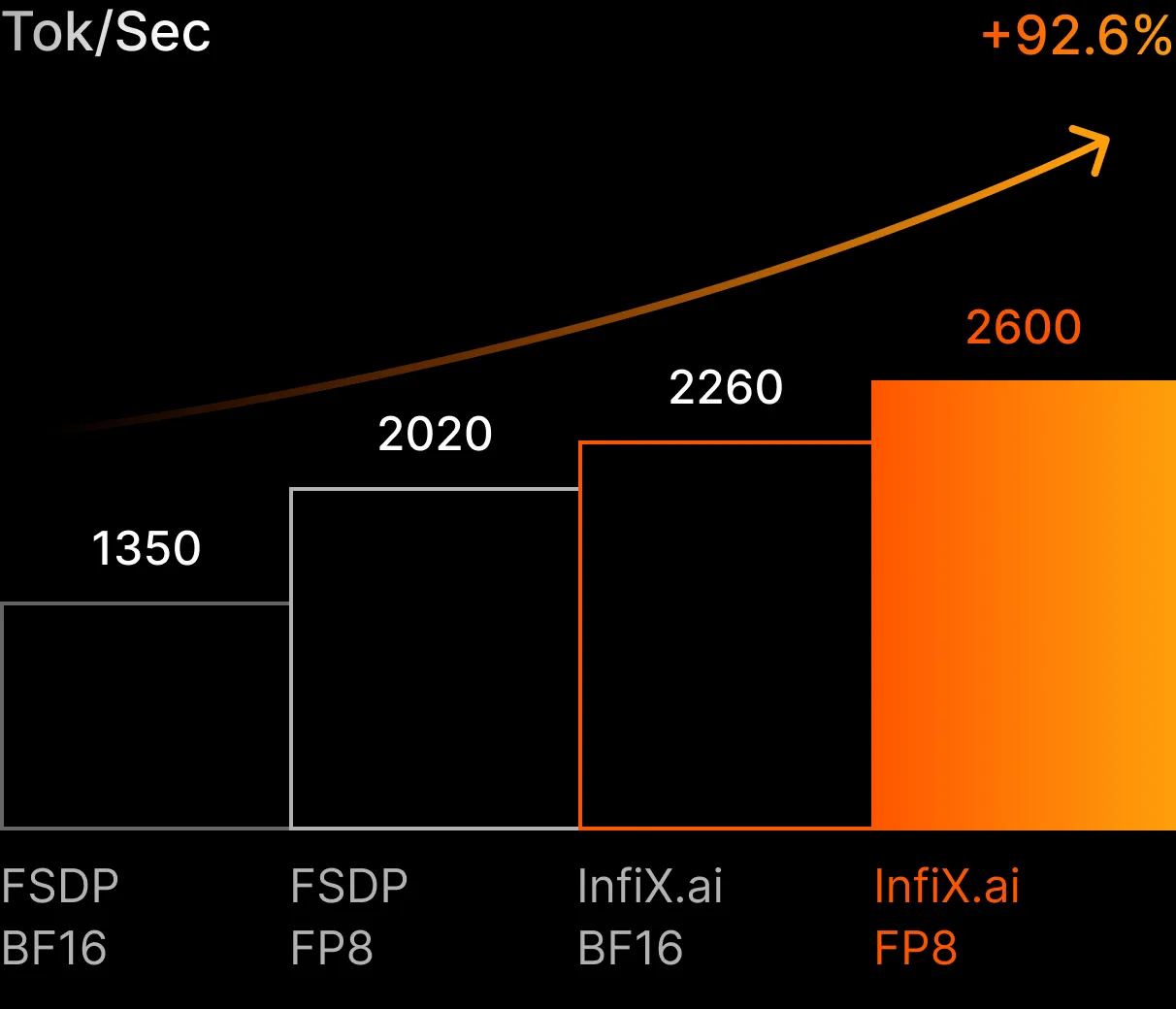
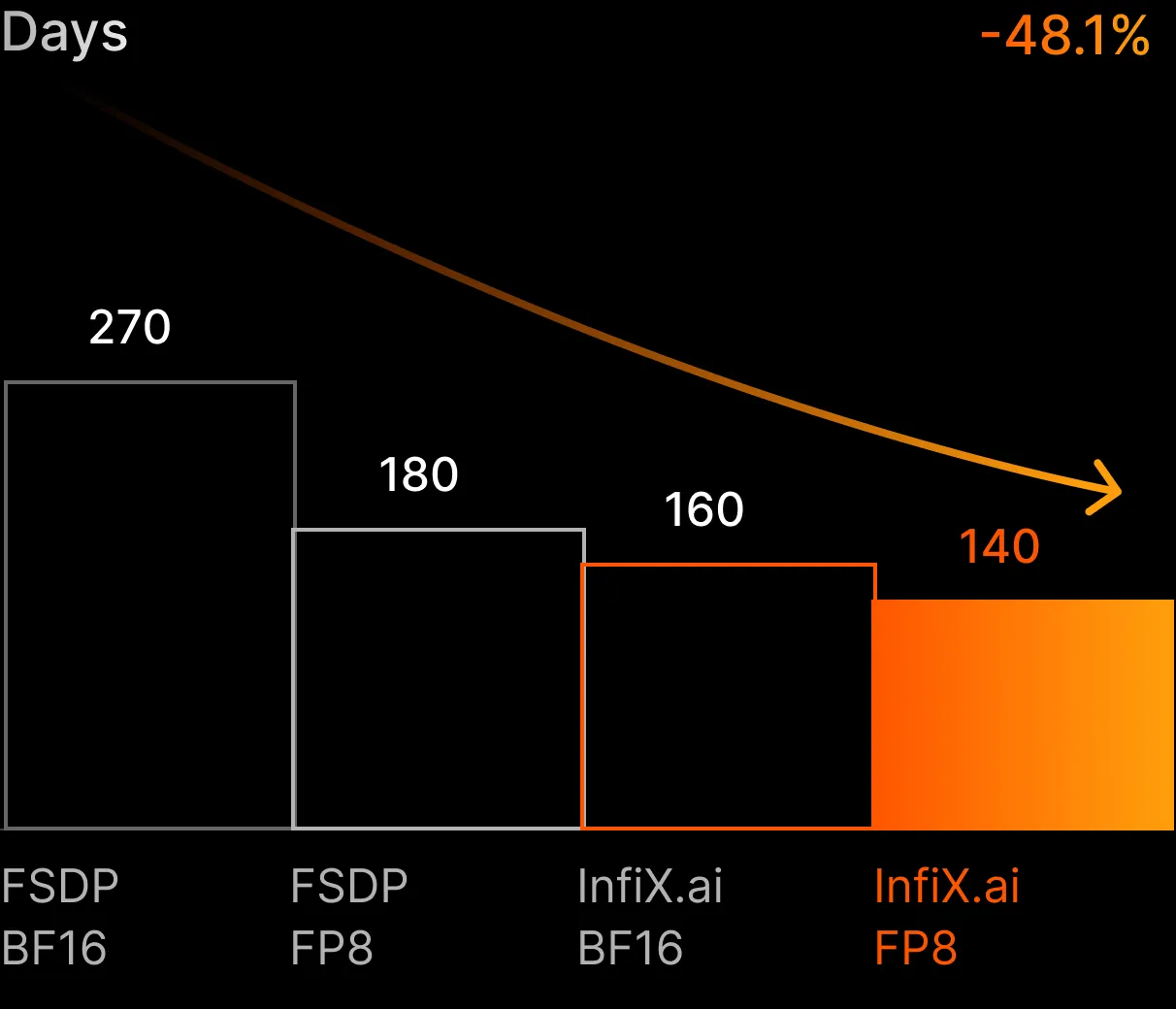
Low-Precision Training 
& Efficient Inference 1
Low-Precision Training 
& Efficient Inference 2
Low-Precision Training 
& Efficient Inference 3

Model Fusion & Model Merging

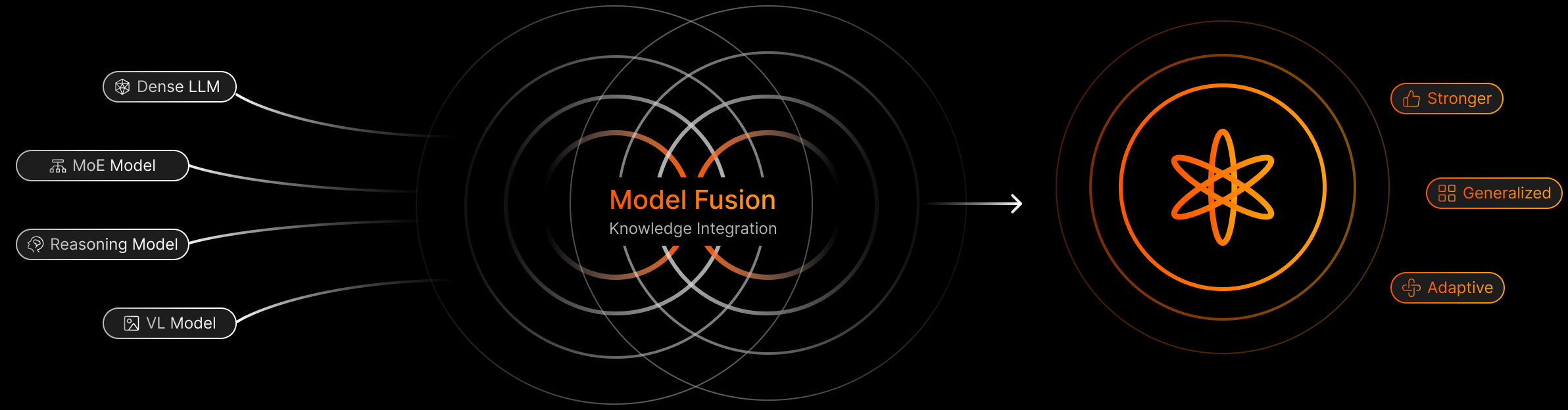
Fuse model strengths into stronger Expert AI without multi-model inference overhead. Support fusion of 10B-scale foundation models across multiple domains, requiring only one ten-thousandth of the GPU hours needed for full pretraining.
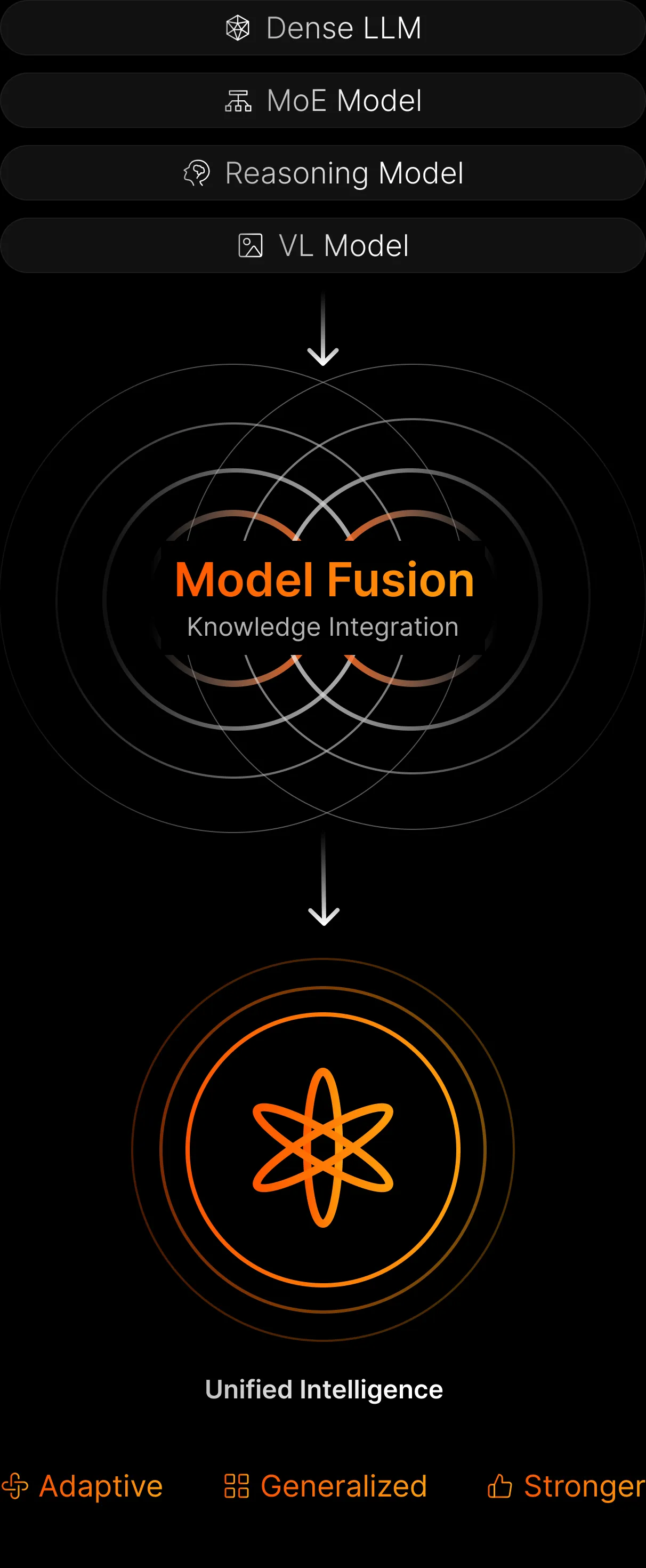
Model Fusion & Model Merging 1

Latest Research

NeurIPS 2026May 13 , 2026

Geometry Conflict: Explaining and Controlling Forgetting in LLM Continual Post-Training

Continual post-training aims to extend large language models (LLMs) with new knowledge, skills, and behaviors, yet it remains unclear when sequential updates enable capability transfer and when they cause catastrophic forgetting. Existing methods mitigate forgetting through sequential fine-tuning, replay, regularization, or model merging, but offer limited criteria for determining when incorporating new updates is beneficial or harmful. In this work, we study LLM continual post-training through three questions: *What drives forgetting? When do sequentially acquired capabilities transfer or interfere? How can compatibility be used to control update integration?* We address these questions through *task geometry*: we represent each post-training task by its parameter update and study the covariance geometry induced by the update. Our central finding is that: **forgetting can be considered as a state-relative update-integration failure, it arises when the covariance geometries induced by tasks misalign with the geometry of the evolving model state**. Sequential updates transfer when they remain compatible with the model state shaped by previous updates, and interfere when state-relative geometry conflict becomes high. Motivated by this finding, we propose **G**eometry-**C**onflict **W**asserstein **M**erging (GCWM), a data-free update-integration method that constructs a shared Wasserstein metric via Gaussian Wasserstein barycenters and uses geometry conflict to gate geometry-aware correction. Across Qwen3 0.6B--14B on domain-continual and capability-continual settings, GCWM consistently outperforms data-free baselines, improving retention and final performance without replay data. These results identify geometry conflict as both an explanatory signal for forgetting and a practical control signal for LLM continual post-training.

NeurIPS 2026May 13 , 2026

NPCBench: A Clinical Apprenticeship Benchmark for Guideline-Constrained Care-Pathway Reasoning in Nasopharyngeal Carcinoma

Current medical LLM benchmarks typically decompose clinical competence into isolated factual questions, single-image interpretation, or brief case scenarios. This fragmented paradigm primarily measures local correctness but provides limited insight into whether models can progressively integrate subspecialty knowledge, multimodal evidence, and evolving patient states into safe, guideline-constrained longitudinal reasoning. To address this gap, we introduce NPCBench, a multimodal clinical apprenticeship benchmark for nasopharyngeal carcinoma (NPC). NPCBench operationalizes specialist training as a staged evaluation of (M)LLMs across guideline recall, atomic rule application, multimodal evidence grounding, longitudinal care planning, state revision, and expert-style consultation. It comprises 4,077 staged evaluation problems and 25 multimodal full-care path episodes, covering pathology diagnosis, MRI staging, and 146 downstream clinical decisions. The benchmark explicitly links stepwise tasks to complete patient-level care trajectories, enabling systematic evaluation of all clinical pathways. Beyond isolated precision, NPCBench evaluates whether the models ground decisions in multimodal evidence, maintain temporally consistent patient states, and provide safe expert-level consultation across complete care trajectories. Across 30 evaluated models, we observe a persistent composition gap: strong performance in local case-level tasks does not translate into episode-level clinical competence required for end-to-end patient management. Overall, NPCBench advances medical AI evaluation from static question answering toward apprenticeship-style workflow evaluation, providing a rigorous testbed for evidence-grounded and temporally coherent reasoning in complex oncology care.

InfiXspeed

Build your own Expert AI
with FP8-powered InfiXspeed.

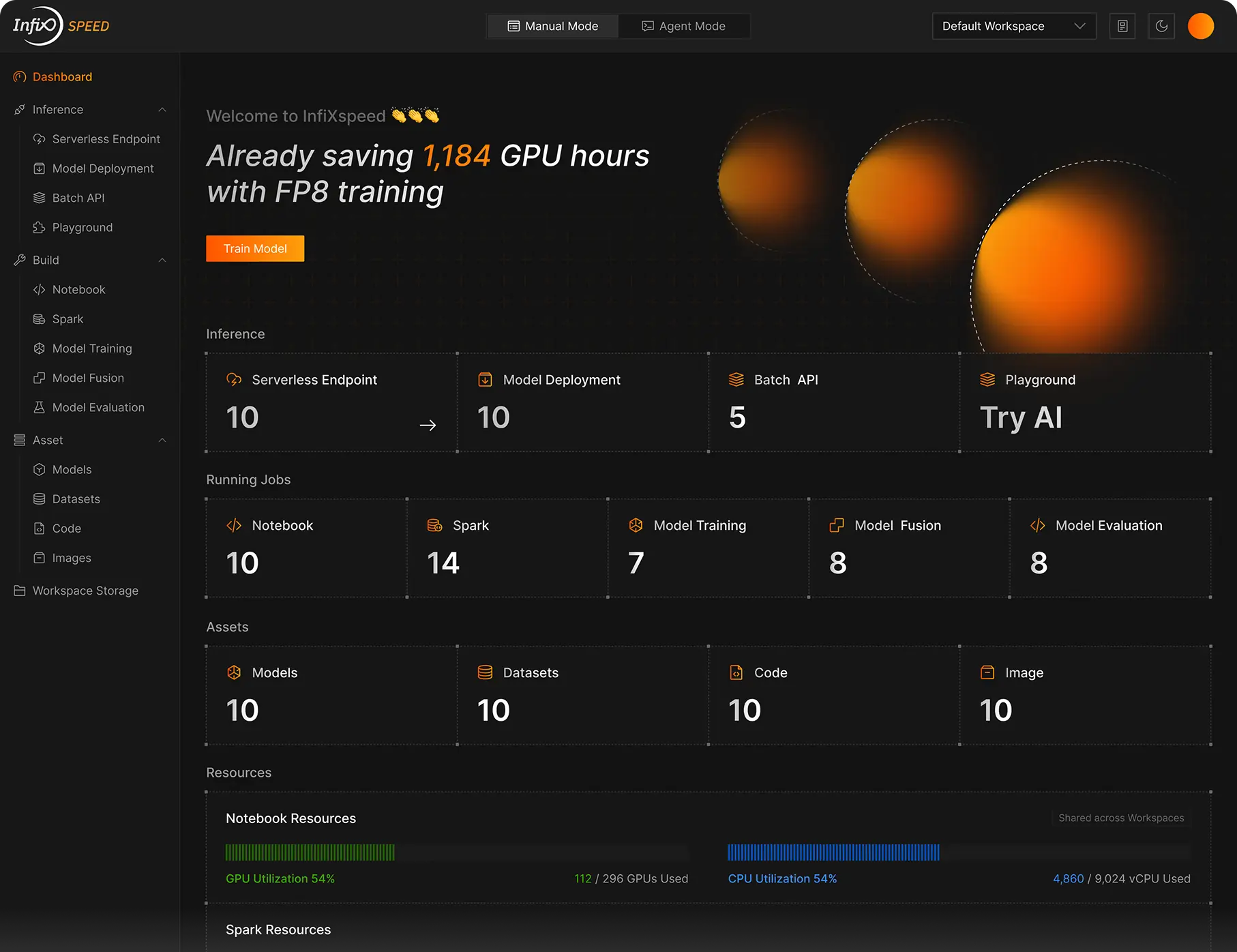
InfiXspeed is InfiX.ai's enterprise platform for efficient domain AI development. It helps organizations turn proprietary data, business workflows, and expert knowledge into domain-specific Expert AI that can be trained, evaluated, and deployed in secure, controlled environments.

Learn more
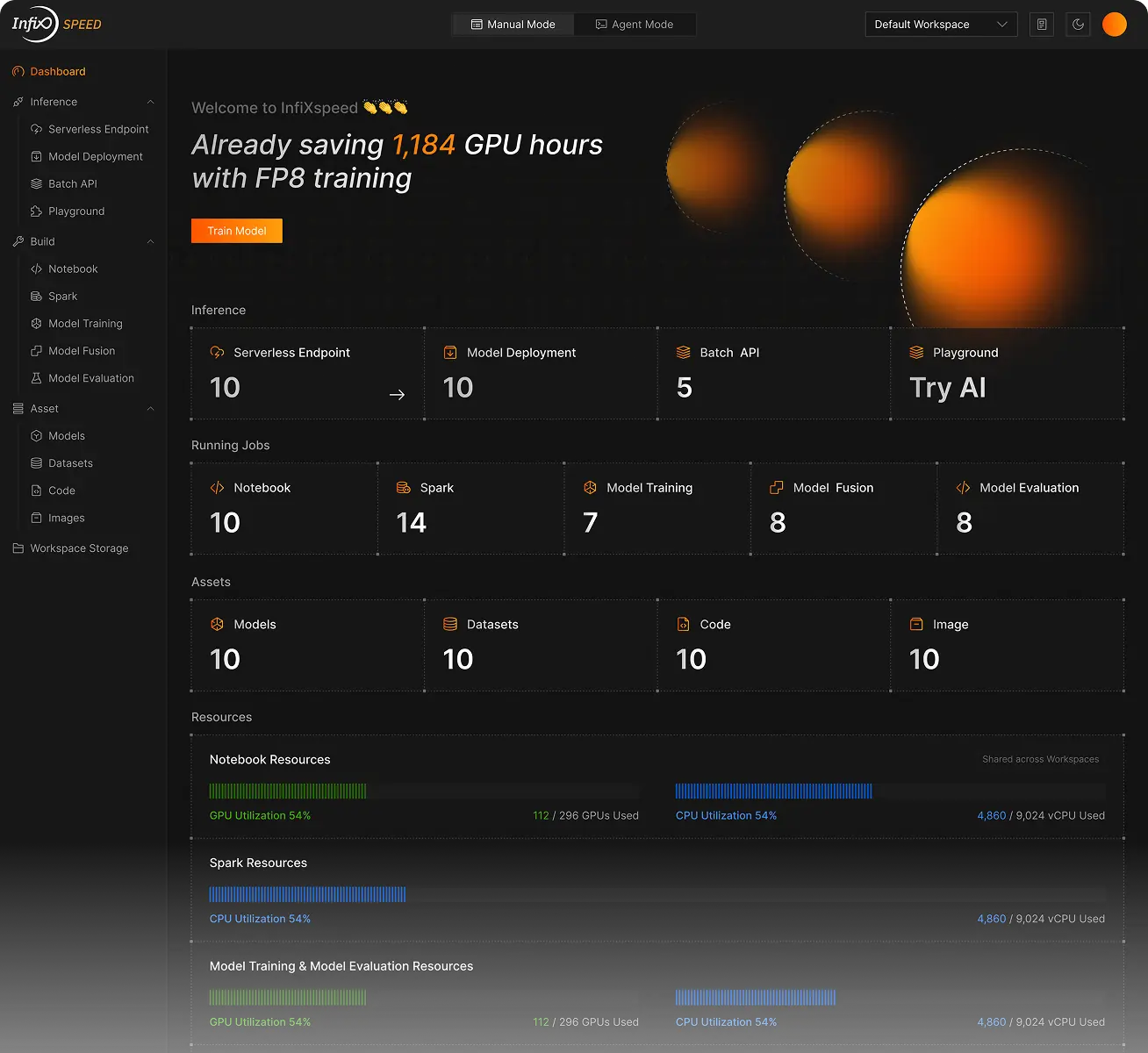
InfiXspeed dashboard preview